
Hanuman Chalisa in Sanskrit: A Comprehensive Guide
Finding a reliable Hanuman Chalisa PDF in Sanskrit requires careful searching, as authentic versions are crucial for accurate recitation and spiritual benefit.
Several online resources offer downloadable PDFs, but verifying their source and transliteration is essential for devotional practice and understanding.
The Hanuman Chalisa, a profoundly revered devotional hymn in Hinduism, holds a special place in the hearts of millions of devotees worldwide. Composed by the 16th-century poet Tulsidas, it’s dedicated to Lord Hanuman, a central figure embodying devotion, strength, and selfless service. The Chalisa, meaning “forty” in Hindi, consists of forty verses – chaupais – that beautifully narrate the qualities, powers, and glories of Hanuman.
While widely known and recited in Hindi, the original essence and deeper philosophical underpinnings are often explored through its Sanskrit roots. The search for a Hanuman Chalisa PDF in Sanskrit reflects a desire for a more precise understanding of the verses, closer to the original intent and linguistic structure. Authentic Sanskrit versions offer a nuanced appreciation of the hymn’s poetic beauty and spiritual depth.
This guide aims to provide a comprehensive exploration of the Hanuman Chalisa, with a particular focus on its Sanskrit form. We will delve into its historical context, significance, core themes, and the benefits of recitation; Understanding the Sanskrit verses unlocks a richer, more profound connection with Lord Hanuman and the timeless wisdom embedded within this sacred text. The availability of reliable PDFs is a key component of this exploration, enabling wider access to this powerful devotional practice.
Historical Context and Authorship (Tulsidas)
Tulsidas, a renowned saint and poet of the Ramcharitmanas, is credited with composing the Hanuman Chalisa in the 16th century, during the Bhakti movement. This period witnessed a surge in devotional poetry dedicated to various deities, emphasizing personal connection and love for God. Tulsidas’s work, deeply rooted in the Rama tradition, aimed to make religious teachings accessible to the common people, utilizing the vernacular language – Awadhi, a dialect of Hindi.
However, the quest for a Hanuman Chalisa PDF in Sanskrit reveals a fascinating layer of historical context. While Tulsidas wrote in Hindi, the underlying concepts and many of the verses draw heavily from Sanskrit scriptures and traditions. Scholars believe Tulsidas skillfully adapted and reinterpreted existing Sanskrit hymns and stories about Hanuman, making them relatable to a wider audience.
Therefore, understanding the Sanskrit influence is crucial for appreciating the Chalisa’s depth. Accessing a Sanskrit PDF allows for comparison with the original sources, revealing the poetic license and devotional interpretations employed by Tulsidas. It highlights his genius in translating complex theological ideas into a simple, yet profoundly moving, devotional form. The availability of these PDFs aids in tracing the hymn’s evolution and appreciating its rich literary heritage.
The Significance of Sanskrit in the Hanuman Chalisa

Although the Hanuman Chalisa is popularly known in its Hindi (Awadhi) form, the underlying significance of Sanskrit cannot be overstated. Sanskrit, considered the “mother of all languages,” holds a sacred position in Hinduism as the language of the scriptures, mantras, and ancient wisdom. Its presence subtly permeates the Chalisa, lending it a profound spiritual weight and resonance.
Seeking a Hanuman Chalisa PDF in Sanskrit unveils this connection. Many verses, while expressed in Hindi, are direct translations or adaptations of Sanskrit shlokas and stories from texts like the Ramayana and the Hanuman Sahasranamavali. This demonstrates Tulsidas’s deep understanding of Sanskrit literature and his intention to imbue the Chalisa with its inherent power.

The phonetic structure and inherent vibrations of Sanskrit words are believed to possess a unique energetic quality. A Sanskrit PDF allows devotees to experience the Chalisa on a deeper level, accessing these subtle vibrations through accurate pronunciation. Furthermore, studying the Sanskrit roots clarifies the meaning of certain verses, revealing nuanced interpretations often lost in translation. It’s a pathway to a more authentic and enriching devotional experience.
Hanuman Chalisa: Core Themes and Philosophy
The Hanuman Chalisa, regardless of whether accessed through a Hindi or a Hanuman Chalisa PDF in Sanskrit, revolves around core themes of devotion, strength, and selfless service. It beautifully encapsulates the essence of Hanuman’s character – unwavering loyalty to Rama, immense physical and mental power, and complete detachment from worldly desires.

The philosophy embedded within the verses emphasizes the path of bhakti (devotion) as a means to attain liberation. Hanuman’s life serves as a model for devotees, demonstrating how complete surrender to the divine can overcome obstacles and lead to spiritual growth. The Chalisa highlights the importance of humility, courage, and righteousness in one’s pursuit of dharma.
A Sanskrit PDF, in particular, allows for a deeper understanding of these philosophical underpinnings. The precise language and poetic structure reveal the subtle nuances of Tulsidas’s message. It underscores the idea that true strength lies not merely in physical prowess, but in unwavering faith and devotion. The Chalisa, therefore, is not just a hymn, but a guide to living a virtuous and fulfilling life.
Understanding the Forty Verses (Chaupais)
The Hanuman Chalisa comprises forty verses, known as chaupais, each meticulously crafted to praise Lord Hanuman’s virtues and recount his heroic deeds. Accessing a Hanuman Chalisa PDF in Sanskrit allows for a closer examination of these verses in their original linguistic form, revealing deeper layers of meaning often lost in translation.
Each chaupai builds upon the previous one, progressively unveiling Hanuman’s multifaceted personality – his wisdom, courage, devotion, and humility. The verses describe his birth, his unwavering service to Rama, his role in the Ramayana, and his blessings bestowed upon devotees. They also emphasize his control over the senses and his detachment from worldly possessions.
Understanding the chaupais requires not just literal translation, but also an appreciation for the poetic devices employed by Tulsidas. The use of metaphors, similes, and alliteration enhances the verses’ beauty and impact. A Sanskrit PDF, with accompanying transliteration and commentary, can greatly aid in deciphering these nuances and unlocking the full spiritual potential of the Chalisa.
Key Deities and Figures Mentioned
The Hanuman Chalisa, even when accessed via a Hanuman Chalisa PDF in Sanskrit, prominently features a pantheon of revered deities and significant figures from Hindu mythology. Central, of course, is Lord Rama, the object of Hanuman’s unwavering devotion, frequently invoked throughout the verses. Sita, Rama’s consort, is also honored, with Hanuman’s role in her rescue being a key theme.

Beyond the primary trio, the Chalisa references several other important deities. Lord Shiva, Hanuman’s divine father, is acknowledged, as are Brahma and other celestial beings like Narada and the Sanaka sages, all depicted as devotees of Hanuman. The mention of Yama, the god of death, highlights Hanuman’s power to overcome mortality.
Furthermore, figures from the Ramayana narrative, such as Lakshmana and Bharata, are included, illustrating Hanuman’s loyalty and service to Rama’s entire family. Studying a Sanskrit PDF allows for precise identification of these figures in their original names and contexts, enriching the understanding of the Chalisa’s intricate web of divine relationships.
Benefits of Reciting the Hanuman Chalisa
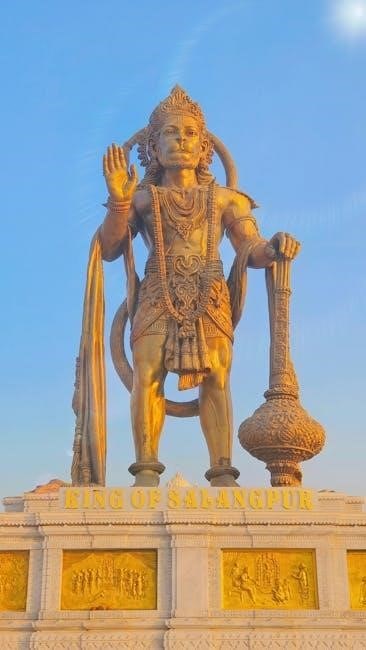
Consistent recitation of the Hanuman Chalisa, whether from a physical copy or a Hanuman Chalisa PDF in Sanskrit, is believed to bestow numerous spiritual and worldly benefits. Devotees report increased courage, strength, and devotion, mirroring Hanuman’s own qualities. It’s considered a powerful practice for overcoming obstacles and negative energies, fostering a sense of inner peace and protection.
The Chalisa is also said to enhance focus and concentration, aiding in academic pursuits and professional endeavors. Many believe it can alleviate anxieties, reduce stress, and promote overall well-being. Recitation is particularly beneficial for those facing challenging circumstances, offering solace and hope.
Furthermore, accessing the Chalisa in its original Sanskrit through a PDF allows for a deeper connection to the verses’ inherent power. The precise pronunciation and understanding of the Sanskrit enhances the meditative quality of the practice, amplifying its positive effects and fostering a stronger spiritual bond with Lord Hanuman.
Hanuman Chalisa PDF Availability & Sources
Numerous online platforms offer the Hanuman Chalisa PDF in Sanskrit for download, catering to devotees seeking authentic texts. However, discerning reliable sources is crucial to ensure accurate transliteration and avoid errors. Websites dedicated to Hindu scriptures and devotional literature often provide verified PDFs.
Several digital libraries and religious organizations also host downloadable versions. It’s advisable to prioritize sources known for their scholarly approach and commitment to preserving the integrity of Sanskrit texts. Beware of websites with unclear origins or those offering heavily modified versions.
Dedicated apps for Hindu prayers and stotras frequently include the Sanskrit Hanuman Chalisa, often with audio recitation features. Always cross-reference the PDF with established Sanskrit resources to confirm accuracy. Remember to download from reputable sources to safeguard against malware and ensure a genuine spiritual experience.

Differences Between Hindi and Sanskrit Versions
While the core essence of the Hanuman Chalisa remains consistent, significant differences exist between the Hindi and Sanskrit versions. The original composition by Tulsidas was in Awadhi, a dialect of Hindi, making it accessible to the common people. The Sanskrit rendition, however, employs a more formal and precise linguistic structure.
The Sanskrit version often features a higher degree of grammatical complexity and utilizes a richer vocabulary rooted in ancient Vedic traditions. Translating the nuances of Awadhi into Sanskrit necessitates adjustments in phrasing and poetic expression. Consequently, while the meaning is preserved, the lyrical flow and emotional impact may subtly differ.
A Hanuman Chalisa PDF in Sanskrit will reveal a more literal and scholarly interpretation, whereas the Hindi version prioritizes devotional fervor and accessibility. Devotees often choose the version that resonates most with their linguistic proficiency and spiritual inclination. Both versions hold immense value and are considered equally sacred.
Pronunciation Guide for Sanskrit Verses
Accurate pronunciation is paramount when reciting the Hanuman Chalisa in Sanskrit, as subtle variations can alter the meaning and efficacy of the verses. A reliable Hanuman Chalisa PDF in Sanskrit should ideally include a transliteration guide alongside the Devanagari script, aiding in correct articulation.
Sanskrit employs a complex phonetic system with sounds not commonly found in English. Mastering the nasal sounds (like ‘ṃ’) and aspirated consonants is crucial. Resources like online audio recordings and guided pronunciation tutorials can be invaluable. Pay close attention to the long and short vowels, as they significantly impact the verse’s rhythm and meaning.
Focus on clarity and precision, rather than speed. Breaking down each verse into smaller syllables and practicing them individually can improve fluency. Remember that proper pronunciation isn’t merely about mimicking sounds; it’s about connecting with the divine energy embedded within each mantra. Consistent practice and guidance from a knowledgeable teacher are highly recommended.
Sri Ramadhoota Stotram: The Sanskrit Song from HanuMan
The recent inclusion of “Sri Ramadhoota Stotram,” a Sanskrit song, in the film HanuMan marks a significant moment for devotional music and cinematic representation of Hindu mythology. This initiative demonstrates a commitment to preserving and promoting Sanskrit, the ancient language of sacred texts, including versions of the Hanuman Chalisa.
While a complete Hanuman Chalisa PDF in Sanskrit focuses on the forty verses, the Stotram offers a complementary musical expression of devotion to Lord Hanuman. The song’s creation highlights a growing trend of integrating authentic Sanskrit elements into modern media, broadening its reach to a wider audience.
Finding the song online alongside resources for the Chalisa PDF can enrich the devotional experience. The Stotram’s lyrical beauty and melodic structure provide a different avenue for connecting with Hanuman’s divine energy, complementing the traditional recitation of the Chalisa verses. It’s a testament to the enduring power of Sanskrit in contemporary culture.
The Role of Hanuman in Hindu Mythology
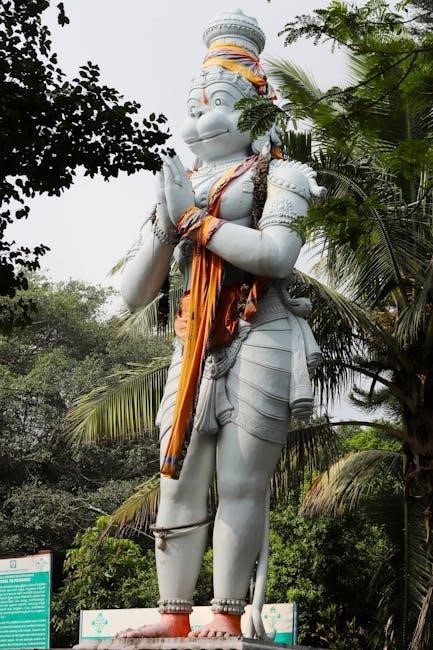
Lord Hanuman occupies a central and revered position within Hindu mythology, embodying unwavering devotion, strength, and selfless service. His story, deeply intertwined with the epic Ramayana, explains the profound significance of reciting texts like the Hanuman Chalisa – and seeking a Hanuman Chalisa PDF in Sanskrit for authentic practice.
Hanuman isn’t merely a powerful warrior; he represents the ideal bhakta (devotee), completely surrendered to Lord Rama. This devotion is the core message conveyed through the Chalisa’s verses. Understanding Hanuman’s multifaceted role – as a divine messenger, protector, and embodiment of humility – enhances the appreciation of the text.
His ability to overcome obstacles, both internal and external, resonates with devotees seeking strength and guidance. The Sanskrit verses, when accessed through a reliable PDF, offer a direct connection to the ancient wisdom surrounding Hanuman’s character. His story continues to inspire millions, making the Chalisa a timeless source of spiritual solace and empowerment.
Hanuman Chalisa and Modern Cinema (HanuMan Movie)
The recent surge in popular culture’s embrace of Hanuman, exemplified by the “HanuMan” movie, has sparked renewed interest in devotional practices like reciting the Hanuman Chalisa. This cinematic portrayal, alongside the release of a Sanskrit song, “Sri Ramadhoota Stotram,” highlights a desire for deeper engagement with Hindu mythology.
Consequently, the demand for authentic resources, such as a Hanuman Chalisa PDF in Sanskrit, has increased. Viewers inspired by the film are seeking to connect with the deity on a personal level through traditional devotional methods. The movie’s success demonstrates a widening audience receptive to stories rooted in faith and heroism.
The inclusion of Sanskrit in the film’s soundtrack underscores the importance of preserving the original language of many sacred texts; Accessing a reliable Sanskrit PDF of the Chalisa allows devotees to experience the verses in their purest form, enhancing the spiritual impact and understanding of Hanuman’s divine attributes.
Spiritual Practices Associated with the Chalisa
Recitation of the Hanuman Chalisa is deeply interwoven with various spiritual practices aimed at fostering devotion, strength, and liberation. Many devotees engage in daily chanting, often at sunrise or sunset, believing it cultivates inner peace and removes obstacles. Utilizing a Hanuman Chalisa PDF in Sanskrit enhances these practices by allowing for accurate pronunciation and a deeper connection to the verses’ original energy.
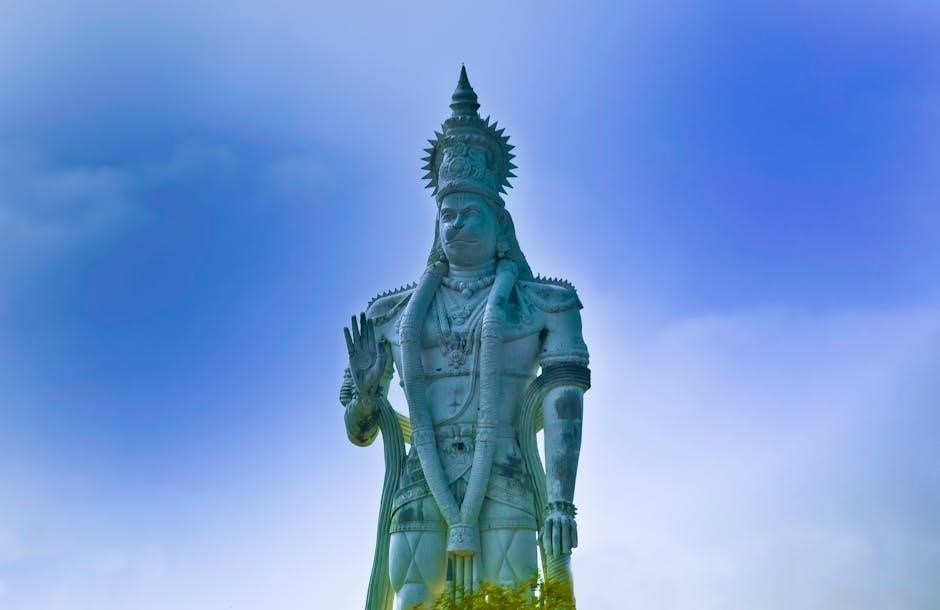
Alongside chanting, practices like meditation on Hanuman’s form and qualities are common. Some devotees perform 108 repetitions of the Chalisa, a sacred number in Hinduism, as a form of intense devotion. The Sanskrit version, when properly understood, facilitates a more profound meditative experience.
Furthermore, the Chalisa is often recited during times of difficulty or crisis, seeking Hanuman’s protection and guidance. Having a readily available Sanskrit PDF allows for uninterrupted practice, even in challenging circumstances, reinforcing faith and resilience. It’s a powerful tool for spiritual growth.
Where to Download a Reliable Hanuman Chalisa PDF in Sanskrit
Locating a trustworthy Hanuman Chalisa PDF in Sanskrit necessitates discerning sources to ensure authenticity and accurate transliteration. Several websites offer downloadable versions, but caution is advised. Reputable platforms dedicated to Hindu scriptures and devotional texts are preferable. Look for PDFs originating from established religious organizations or scholars known for their expertise in Sanskrit and Hanuman worship.
Websites like Stotramini and archive.org sometimes host verified Sanskrit texts, including the Hanuman Chalisa. However, always cross-reference the content with known Sanskrit verses to confirm accuracy. Beware of sites with unclear origins or those offering heavily modified versions.
Downloading from trusted sources minimizes the risk of encountering errors or misinterpretations that could hinder the spiritual benefits of recitation. Prioritize PDFs that include clear Devanagari script and, ideally, a transliteration guide for pronunciation. Remember to scan downloaded files for viruses before opening them.